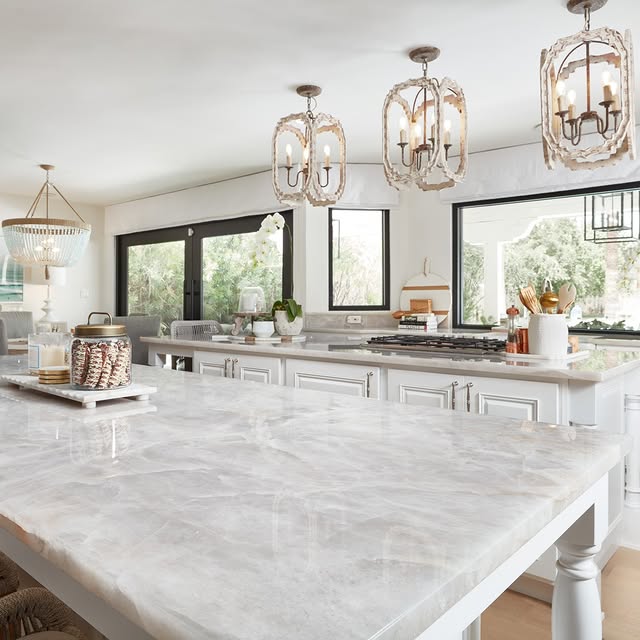
Quick Summary: This guide provides a complete overview of selecting, processing, inspecting, installing, and maintaining travertine for large construction projects. It covers stone types, finishes, hole filling techniques, quality control, varieties, thickness recommendations, exterior wall applications, and long-term maintenance tips.
Travertine for Large Construction Projects in China: 5-Step Guide

Travertine has been a favored natural stone in architecture for thousands of years. From ancient Roman structures to modern commercial buildings, travertine is valued for its durability, elegant appearance, and versatility.
In contemporary construction, travertine is widely used in hotels, airports, commercial plazas, and luxury residential projects. Its natural textures and warm tones create a timeless aesthetic while providing strong performance for demanding environments.
Selecting the right travertine for large-scale projects requires attention to stone type, finish, thickness, structural stability, and quality consistency. This guide covers the full lifecycle: from selection and processing to installation, quality control, and maintenance, ensuring professional, zero-error project execution.
What Is Travertine?
Travertine is a type of natural limestone formed by mineral deposits from hot springs. Its porous structure and layered patterns give each slab unique texture and visual depth. Common colors include beige, ivory, walnut, and silver, each offering distinct aesthetics for different applications.
Why Travertine Is Popular
- Natural Architectural Aesthetic: Adds depth and elegance to lobbies, façades, and plazas.
- Versatile Finishing Options: Honed, polished, tumbled, brushed, or filled & honed for different functional and aesthetic requirements.
- Excellent Workability: Easier to cut and shape than harder stones, allowing precise, large-scale installations.
Travertine Processing and Filling Holes
- Epoxy resin – high strength, transparent, color-adjustable
- Cementitious filler – cost-effective, suitable for exteriors
- Stone dust + resin – color-matched for a natural finish
- Polyurethane (PU) filler – flexible and crack-resistant for thermal movement
- Clean holes of debris
- Apply chosen filling material
- Polish and grind to match surface
- Inspect for color and uniformity
Quality Control for Large Travertine Projects
Professional suppliers follow a strict 5-step inspection process:
- Raw Block Selection: Choosing high-quality stone blocks with minimal defects and uniform density.
- Slab Cutting and Inspection: Cutting raw blocks into slabs while checking for cracks, fissures, and natural voids.
- Color Sorting: Grouping slabs by tone and pattern to maintain visual consistency across walls and floors.
- Dimensional Verification: Measuring thickness, length, and width to ensure precise cut-to-size dimensions.
- Packaging Inspection Before Shipment: Ensuring secure packaging, correct labeling, and proper stacking to prevent damage during transport.
For international projects, consistent packaging and labeling are essential to simplify installation sequencing on site.
Common Travertine Varieties
- Beige Travertine – warm beige, layered pores, interior floors and walls
- Silver Travertine – light gray, fine pores, modern interiors
- Ivory Travertine – creamy yellow, medium pores, hotel lobbies
- Walnut Travertine – deep brown, bold patterns, feature walls
- Fossil/Spiral Travertine – decorative fossil patterns, artistic interior walls
Recommended Thickness
| Application |
Recommended Thickness |
| Interior wall |
15–20 mm |
| Interior flooring |
20 mm |
| Exterior cladding |
30 mm |
| Exterior paving |
30–50 mm |
Installation Considerations
- Hole grading: Fill large holes, leave small ones for natural texture
- Thickness uniformity: Ensures proper alignment during installation
- Crack prevention: Wet cutting and low-speed machining recommended
- Color consistency: Use stones from the same batch for large surfaces
- Polishing sequence: Coarse → fine → final polish
Maintenance After Installation
- Regular cleaning with neutral cleaners, avoiding acids or alkalis
- Apply sealants to prevent staining
- Polish indoor floors periodically for aesthetic enhancement
- Prevent heavy object impacts on porous surfaces
Travertine for Exterior Walls
- Select high-density stone for durability
- Fill all holes to prevent water penetration
- Apply waterproof coating for extra protection
- Inspect and repair filled areas annually
Authority References: Natural Stone Institute, Marble Institute of America
Expert Q&A
- Can travertine be used outdoors?
- Yes, if high-density stone and proper filling materials are used. Brushed or tumbled finishes are recommended.
- What materials are used to fill travertine holes?
- Epoxy resin, PU filler, cementitious filler, and stone dust + resin.
- How to maintain travertine after installation?
- Clean with neutral cleaners, seal surfaces, avoid heavy impacts, and polish indoor areas as needed.
- What are the common travertine varieties?
- Beige, silver, ivory, walnut, and fossil/spiral travertine.
- Are special precautions needed for travertine on exterior walls?
- Yes, including dense stone selection, hole filling, waterproof coating, and annual inspections.
Internal Link Planning
Final Note / Practical Takeaway: Travertine is versatile for both interior and exterior projects when properly selected, filled, inspected, and maintained. High-density stone, correct finishing, and regular care ensure durability and aesthetic excellence in large construction projects.